What Looks Like Resistance Might Be Decision Fatigue
Apr 07, 2026
One thing we don’t talk about enough when we’re trying to make change in schools is how much decision-making everyone is already carrying.
Spend a day in a classroom and you feel it almost immediately. You’re constantly making judgment calls. How to respond in the moment, what to adjust in the lesson, who needs support right now, what can wait until later. Every interaction requires a decision, whether it’s instructional, behavioral, emotional, or relational, and there isn’t really a pause in it.
This is what decision fatigue in schools looks like. It happens when constant decision-making drains mental capacity over time, making it harder to think clearly, prioritize, and follow through.
So when a new initiative shows up, even a small one, it doesn’t enter a clean, open space. It lands on top of everything that’s already in motion.
Where We Misread What’s Happening
This is where things start to get misread.
A teacher hesitates. Implementation takes longer than expected. Something shows up partially done, or there’s a bit of pushback, or maybe just a quiet lack of follow-through. It’s easy to look at that and assume it’s a motivation issue, like something about their willingness is off.
What I’ve come to see is that sometimes, what looks like resistance is actually decision fatigue in teachers.
Why Decision Fatigue Looks Like Resistance
After a full day of constant decision-making, the brain starts conserving energy. It looks for efficiency wherever it can, not as a reflection of care or commitment, but simply because the capacity that was there at the beginning of the day isn’t there anymore.
Things get simplified. Decisions get delayed. People fall back on what’s familiar because it requires less effort to hold.
I notice this in myself too. The way I think and respond late in the day feels different. My patience shortens, my thinking narrows, and I’m more likely to choose what’s easiest in the moment instead of what I might choose earlier in the day when I have more space.
This is where decision fatigue and resistance get confused. What looks like disengagement is sometimes a signal that someone’s mental capacity is already maxed out.
So when resistance shows up, it’s worth slowing down before assigning meaning to it.
We often interpret hesitation as a belief problem when sometimes it’s really a capacity problem.
That distinction matters more than it seems.
What Leaders Can Do Instead
When we misread the cause, we tend to respond by adding more. More pressure, more expectations, more decisions. We end up placing additional weight on something that’s already overloaded.
A more useful place to look is the load itself.
What are we asking people to carry right now?
Where can decisions be reduced or simplified?
Where can the next step be made more obvious?
Where can something unnecessary be taken off the plate?
This isn’t about lowering expectations. It’s about increasing the likelihood that those expectations can actually be met.
When people have more space, the quality of their engagement changes. They think more clearly, act more intentionally, and respond with more care instead of just getting through what’s in front of them.
A Better Question to Ask
Before assuming someone is resisting the work, pause long enough to consider what might actually be happening.
Are they pushing back, or are they running out of capacity?
That question shifts how you lead. And it changes what becomes possible next.
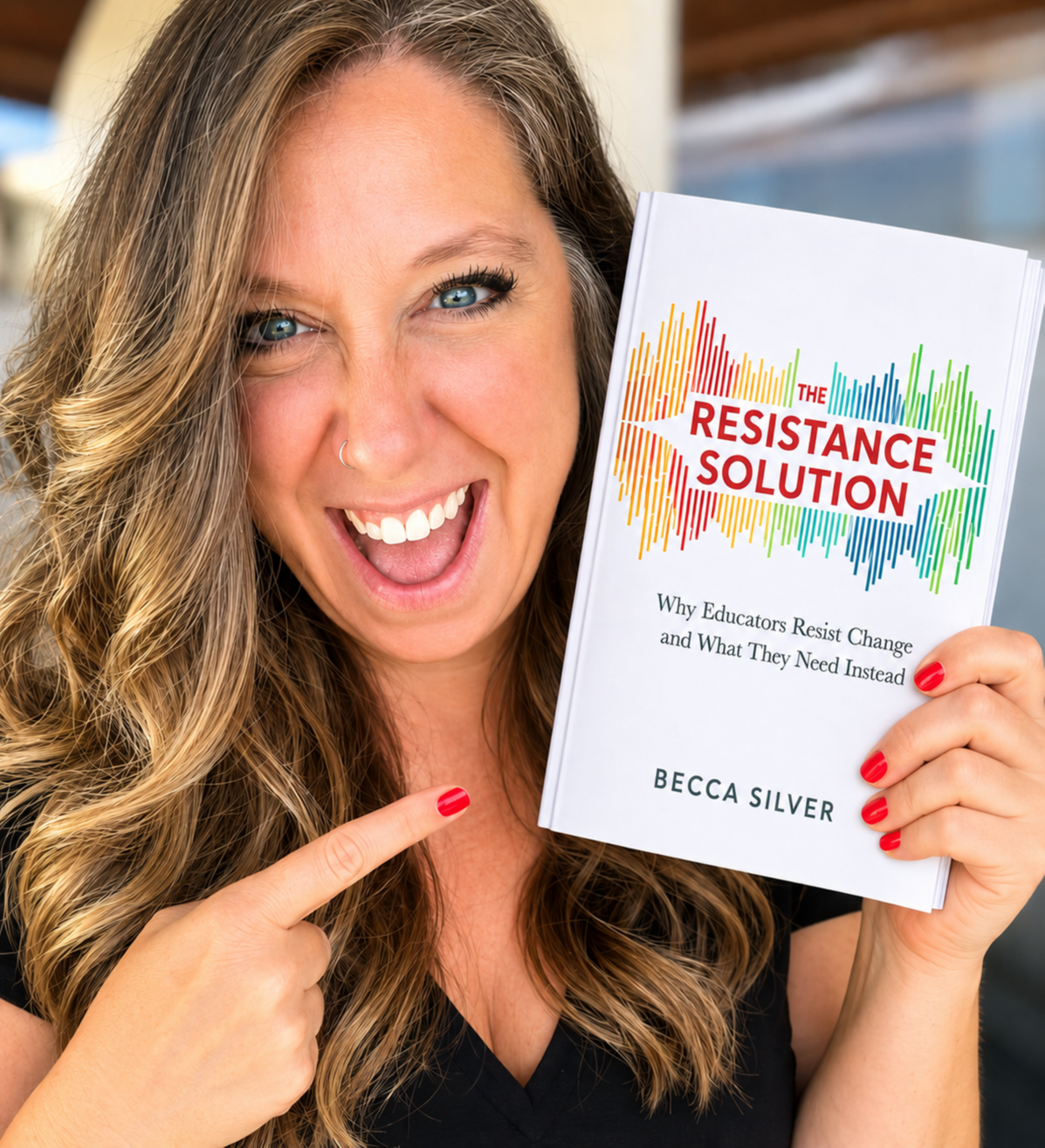
WANT TO DIVE DEEPER IN THIS WORK? Grab my book, The Resistance Solution !
What’s really causing the resistance?
You’re seeing the pushback, the hesitation, the lack of follow-through. This quick audit helps you pinpoint what’s actually underneath it so you can respond in a way that works.
Stay connected with news and updates!
Join our mailing list to receive the latest news and updates from our team.
Don't worry, your information will not be shared.
We hate SPAM. We will never sell your information, for any reason.